
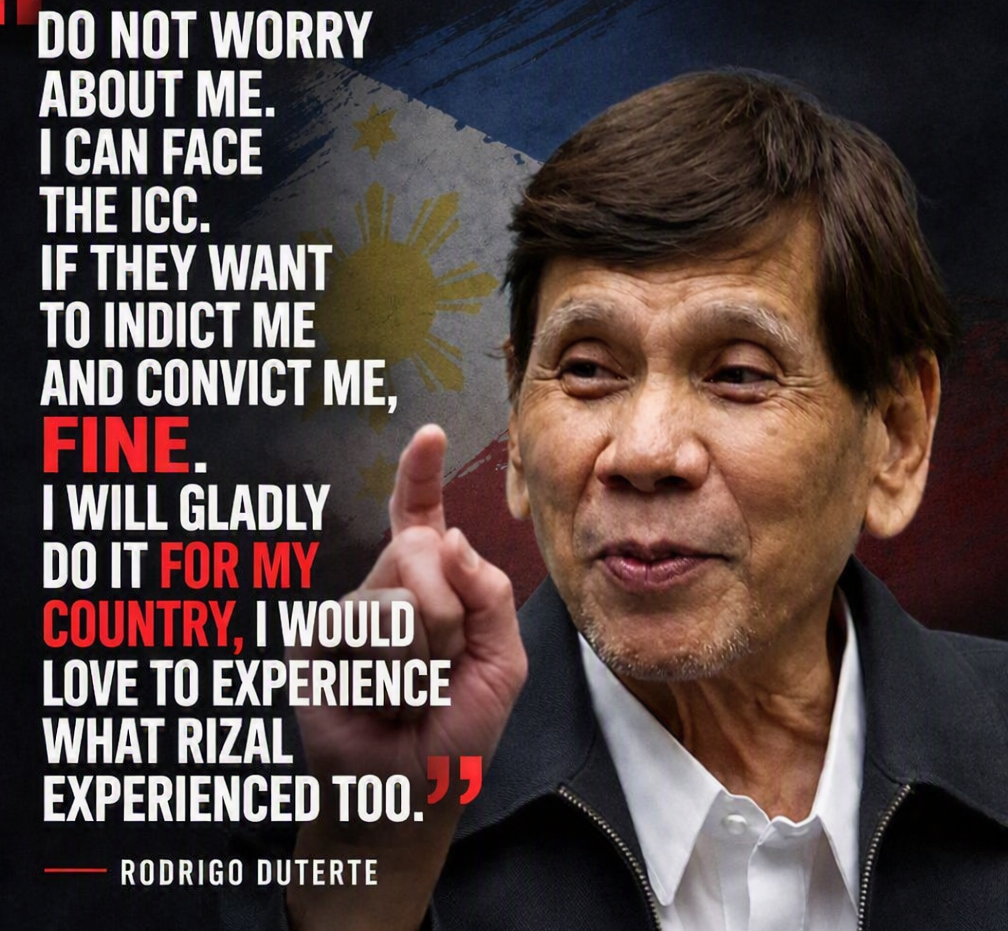
Former Republic of the Philippine President Rodrigo Duterte’s face — unmistakable, weathered, familiar — historically flooded my feed like a tide. On timelines. In shared photos. In sudden profile picture changes. It felt less like news… and more like a collective emotional event.
At first, I thought: Ah, Duterte is back in the headlines. But the deeper I scrolled, the clearer it became — this wasn’t a headline. This was a reaction.
People weren’t just posting. They were feeling.
Some were happy, almost celebratory. Some were emotional, relieved, even teary-eyed. Others looked genuinely moved just to see the old man again — alive, present, waving.
And then came the posts.
His face turned into profile photos. His image shared like a keepsake. Memes, tributes, comparisons — even digital “pulse checks” against the current administration. Supporters placed Duterte’s photo beside President Marcos Jr.’s, counting hearts, likes, angry faces, turning social media into an unofficial referendum of nostalgia and frustration.
For a moment, the Filipino internet became a small theater of political memory.
And I found myself asking:
What is it about this man that still makes people feel this much?
Maybe that’s what people call the Duterte magic — a phenomenon that refuses to fade, even when the man himself steps away from the stage.
After roughly eighteen months away from an in‑person ICC appearance, Duterte simply showed up. He sat. He listened. He looked toward the gallery.
And then — for a few seconds — he waved.
That was it. A wave.
But sometimes, a wave is enough.
Reports say some supporters cried “tears of joy.” Others admitted they had braced themselves to see him frail or diminished. Instead, they were delighted — even shocked — at how healthy he appeared. Some said he looked younger. Others joked about the longer hair.
Meanwhile, thousands of kilometers away, his photographs were already racing through Philippine social media.
One photo becoming another post. Another post becoming another memory. Another memory becoming another emotion.
And that’s when it struck me:
The photograph wasn’t the story. The reaction was.
For some, his face brought happiness. For others, nostalgia. For others still, relief. And for many — especially his critics — it brought pain, anger, or the resurfacing of unresolved political wounds.
One man.
One photograph. Completely different histories.
That is the strange power of political memory.
We don’t all remember the same leader in the same way. Some remember the president who spoke for them. Some remember the policies they supported. Some remember the fear, the controversies, the arguments. And some remember the larger‑than‑life figure who once dominated Philippine politics like a storm.
But when he resurface to the mainstream revealed something hard to ignore:
The emotional connection didn’t disappear just because the man disappeared from public view. It was still there — waiting. Dormant. Ready.
And all it needed was a photograph to wake it up.
What overwhelmed me wasn’t just Duterte himself — but the intensity of the reaction around him.
The hearts.
The tears.
The laughter.
The nostalgia.
The memes.
The comparisons.
Even the anger directed at those who were happy to see him.
Perhaps that is the most fascinating thing about political figures who become part of a nation’s collective memory:
They stop being just politicians.
They become symbols.
Arguments.
Stories.
Idols.
Villains.
Heroes to some.
Ghosts of an era others thought had already passed.
I wasn’t looking for any of that. I was just scrolling.
And then I saw this man's familiar face....it's amazing that his image once again became a symbol of hope, love for the country, and the desire to protect Filipino people; its children, life, future, culture, and motherland.